Homesteading in Kentucky: The Complete 2026 Guide
Reliable water, a long growing season, ~75,000 farms, and light regulation make Kentucky a well-rounded homesteading pick. Here's the full 2026 breakdown.
Written by Homestead Finder Editorial
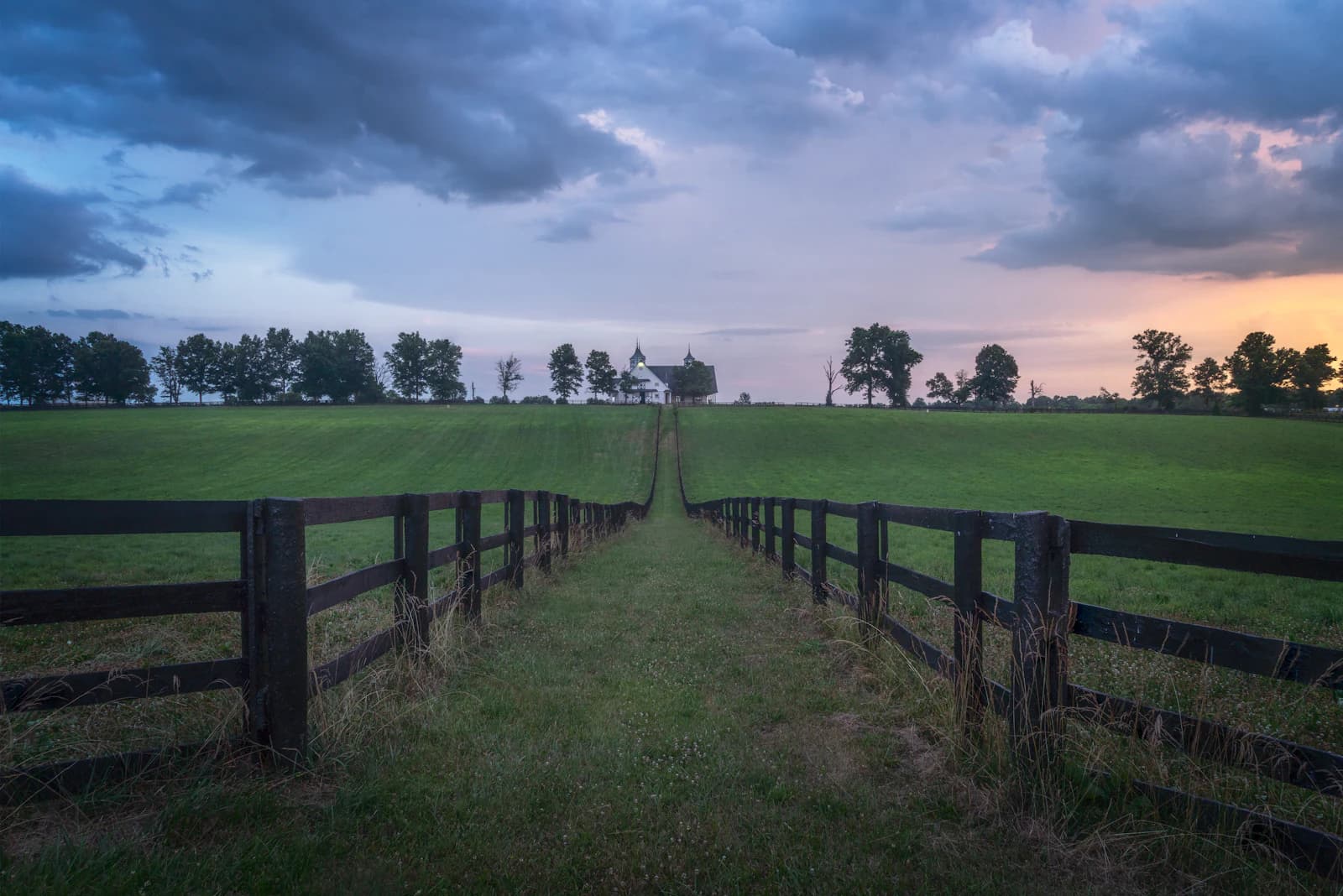
Kentucky doesn't top many "cheapest land" lists, and that's exactly why it gets overlooked by homesteaders chasing the lowest price per acre. But once you weigh what actually keeps a homestead alive year after year, the Bluegrass State starts to look like one of the most balanced choices in the country: dependable rainfall, riparian water rights, a long-ish growing season, roughly 75,000 working farms, and a regulatory climate that mostly leaves rural landowners alone.
This guide walks through the practical reality of homesteading in Kentucky in 2026, from taxes and building codes to food freedom and the best regions to look at. For the current, data-driven comparison of every metric, start with the live Kentucky state page, then come back here for the narrative buyer's guide.
Kentucky at a Glance
| Factor | Kentucky |
|---|---|
| State income tax (top rate) | 4% |
| Sales tax | 6% |
| Business climate rank | #23 |
| Homestead exemption | $46,350 |
| Avg. farm real estate | ~$4,800/acre |
| Number of farms | ~75,000 |
| USDA hardiness zones | 6a–7b |
| Annual rainfall | 45–50 inches |
| Growing season | 180–210 days |
| Water rights | Riparian (favorable) |
| Off-grid living | Generally legal |
| Building codes | Partial (many rural counties exempt) |
| Homeschool regulation | Low |
| Gun laws | Constitutional Carry |
| Raw milk | On-farm / farm-gate sales only |
| Cottage food | Permitted |
| Violent crime | ~250 per 100k (low) |
| Political lean | R+16 |
Why Kentucky for Homesteading
The case for Kentucky is consistency. A lot of states win on one or two headline metrics and lose badly on the rest. Kentucky rarely scores highest in any single category, but it almost never scores poorly either, and for a working homestead that even profile matters more than any one number.
Water is the foundation. With 45 to 50 inches of rainfall spread fairly evenly through the year and riparian water rights, you're not fighting drought or chasing well permits the way you would in much of the arid West. The growing season runs roughly 180 to 210 days, long enough for serious vegetable production, a real second planting, and feed crops for livestock.
Then there's the agricultural depth. Around 75,000 farms operate in Kentucky, which means infrastructure most newcomers underrate: feed stores, large-animal vets, livestock auctions, equipment dealers, processors, and neighbors who actually know how to farm the local soils. Light regulation, constitutional carry, low homeschool oversight, and a statewide violent crime rate around 250 per 100,000 round out a state that's a strong pick among the best states for homesteading in 2026.
Taxes and Cost of Living
Kentucky's tax picture is moderate and trending in a favorable direction. The state income tax tops out at a flat 4%, lower than many neighbors, and sales tax sits at 6% with no local add-ons in most areas. The state's business climate ranks #23, squarely mid-pack, which is fine for a homestead built around a small farm operation, cottage food sales, or a remote job.
Property taxes are where homesteaders should pay attention. Kentucky offers a homestead exemption of $46,350 for qualifying owners (primarily those 65 and older or totally disabled), which shaves a meaningful chunk off the assessed value of an owner-occupied home. Effective property tax rates in rural Kentucky tend to run low, but rates and exemptions are set at the county level, so confirm the specifics with the local PVA (Property Valuation Administrator) office before you buy.
Overall cost of living in rural Kentucky is below the national average, and the land price premium discussed below is partly offset by lower everyday expenses once you're settled.
Land and Farms
Here's the honest tradeoff. Kentucky farm real estate averages around $4,800 per acre, which puts it above the cheapest homesteading states. If your single priority is the lowest possible entry price, states with cheaper land exist, and you can compare them side by side on the all-states overview.
What you're paying for in Kentucky is productivity and reliability. That $4,800-per-acre average reflects strong demand from an active agricultural economy and the simple fact that well-watered, workable land grows things. For a homesteader who intends to actually farm, not just hold acreage, the higher price often pencils out faster than cheap, dry, rocky land in a marginal climate.
Prices vary widely by region. Prime central Kentucky farmland near Lexington commands a premium, while forested parcels in the eastern part of the state can be had for considerably less. Buy on soil quality, water access, road frontage, and slope, not just the sticker price per acre.
Climate and Growing Season
Kentucky spans USDA hardiness zones 6a to 7b, giving most of the state a temperate, four-season climate. The growing season of 180 to 210 days supports a wide range of crops: cool-season greens in spring and fall, heat-loving summer vegetables, tree fruit, berries, and pasture that greens up early and holds late.
Summers are warm and humid, which is excellent for tomatoes, peppers, corn, and forage but does invite fungal pressure, so plan for airflow, resistant varieties, and good crop rotation. Winters are real but moderate, cold enough to give fruit trees their chill hours and knock back pests, without the brutal short seasons of the far North. For most homestead staples, Kentucky's climate is a genuine asset.
Water
Water is arguably Kentucky's strongest selling point. The state averages 45 to 50 inches of rain annually, and it operates under riparian water rights, meaning landowners with water touching or crossing their property generally have the right to reasonable use of it. That's a far more forgiving framework than the prior-appropriation systems common in the West, where water is a separately owned and fiercely contested asset.
In practice this means ponds, springs, creeks, and rain catchment are dependable parts of a Kentucky homestead plan rather than gambles. Well water is widely available, and the abundant rainfall keeps the water table healthier than in drier regions. Always verify the specific water situation of a parcel, but as a category, Kentucky's water security is hard to beat.
Building Codes and Off-Grid Living
Off-grid living is generally legal in Kentucky, and the building-code situation is friendlier than in many states. Kentucky has a residential building code, but its statewide reach is partial: enforcement is uneven and many rural counties have limited or no active inspection regimes for one- and two-family dwellings. That gives owner-builders meaningful latitude in a lot of the countryside.
That said, "partial" is not "none." Plumbing, electrical, and septic permits are commonly required even where structural inspection is light, and enforcement varies dramatically from county to county. If building your own cabin or installing solar, a composting toilet, or a non-grid power system is central to your plan, call the county building and health departments directly before you close. If a fully code-free build is your goal, it's worth comparing Kentucky against the states with the fewest building codes.
Food Freedom: Cottage Food and Raw Milk
Kentucky is solidly in the middle-to-favorable range on food freedom. Cottage food is permitted, so you can produce and sell home-based foods like baked goods, jams, and other shelf-stable items directly to consumers, a real income stream for many homesteads. Confirm the current list of approved products and any labeling or sales-venue rules, since these are periodically updated.
Raw milk is more restricted: Kentucky allows on-farm and farm-gate sales only, not retail distribution. Practically, that means a homesteader with a family cow or small dairy herd can sell raw milk directly from the farm but cannot wholesale it through stores. It's a workable arrangement for a small operation, just not a high-volume one. Cannabis is legal for medical use only, so factor that into any plans involving it.
Homeschooling and Gun Laws
For families, Kentucky is welcoming. Homeschool regulation is low: the state treats homeschools as private schools with minimal reporting and oversight, giving parents wide freedom over curriculum and scheduling. This is one of the easier states in which to educate children at home.
On firearms, Kentucky is a constitutional carry state, meaning law-abiding adults can carry without a permit. Combined with the low statewide violent crime rate (around 250 per 100,000) and an R+16 political lean, the state offers the kind of self-reliance-friendly legal environment many homesteaders are looking for. As always, verify the latest specifics, but the overall posture is firmly favorable.
Best Regions for Homesteading
The Bluegrass region (central Kentucky): Home to the state's best soils and deepest agricultural tradition. This is prime farming country, and it shows in the land prices, especially anywhere near Lexington. Ideal if soil quality and ag infrastructure top your list and you can absorb the premium.
Appalachian eastern Kentucky: Forested, more affordable, and beautiful, but steeper. Terrain is the main constraint here; usable flat acreage is at a premium and access can be challenging. Great for a wooded, private, lower-cost homestead if you're prepared to work with the topography.
Western Kentucky: Flatter and more open, with strong row-crop farmland and a workable, mechanization-friendly landscape. A good fit for larger plantings, grain, or anyone wanting gentler ground.
The Pennyroyal / south-central area: A mixed zone blending rolling farmland, pasture, and woodland. Often a sensible middle ground on both price and terrain, worth a close look for a balanced homestead.
Downsides and Things to Watch
No state is perfect, and Kentucky's tradeoffs are real. The biggest is land price: at roughly $4,800 per acre on average, Kentucky is more expensive than the cheapest homesteading states, and budget-first buyers will feel it. The premium is justified by water and productivity, but it's a premium nonetheless.
Summer humidity and fungal pressure demand smart crop management, and the warm, wet climate that grows so well also grows weeds, mold, and pests vigorously. Eastern Kentucky's terrain can sharply limit what a given parcel can actually do, so never buy steep land sight-unseen. And because building codes, property taxes, raw milk rules, and cottage food specifics are all administered or modified locally, "Kentucky is friendly" doesn't guarantee your particular county is. Verify everything at the county level.
Getting Started
A sensible path looks like this:
- Compare the data. Start on the Kentucky state page and weigh it against alternatives using the best states for homesteading in 2026 guide. If you're torn between neighbors, the Tennessee homesteading guide makes a useful side-by-side.
- Pick a region based on your priorities: soil and ag depth (Bluegrass), affordability and woods (eastern), open farmland (western), or balance (Pennyroyal).
- Vet the county. Call the PVA, building department, and health department about taxes, codes, septic, and water before making an offer.
- Inspect the parcel in person for water, slope, road access, and soil, and walk it in wet weather if you can.
- Plan your food-freedom income around cottage food and farm-gate sales from day one.
Conclusion
Kentucky is the well-rounded pick. It won't be the cheapest land you find, but reliable rainfall, riparian water rights, a long growing season, ~75,000 farms' worth of infrastructure, light regulation, and low crime add up to a state where a homestead can genuinely thrive rather than just survive. For growers especially, the dependable water alone can justify the price difference.
Ready to compare Kentucky against the rest of the country? Explore the live Kentucky data page and browse all 50 states to find your match.
Frequently Asked Questions
Is Kentucky a good state for homesteading?
Yes, particularly for homesteaders who plan to actually farm. Its reliable 45–50 inches of annual rainfall, favorable riparian water rights, 180–210 day growing season, deep agricultural infrastructure, and light regulation make it one of the more balanced choices in the country. The main tradeoff is land price, which runs higher than the cheapest states.
Can you live off-grid legally in Kentucky?
Generally, yes. Off-grid living is legal, and building-code enforcement is only partial statewide, with many rural counties applying limited or no structural inspection to homes. Plumbing, electrical, and septic permits are often still required, so confirm the rules with your specific county before building.
How much does homestead land cost in Kentucky?
Farm real estate averages around $4,800 per acre statewide, though prices vary widely. Prime central Kentucky land near Lexington costs more, while forested eastern parcels are typically cheaper. Buy on soil, water, and access rather than price alone.
Can I sell raw milk and homemade food in Kentucky?
Cottage food is permitted, so you can sell many home-based, shelf-stable foods directly to consumers. Raw milk is more limited: Kentucky allows on-farm and farm-gate sales only, not retail distribution. Verify the current rules, as they're updated periodically.
Data reflects 2026 figures. Tax rates, building codes, property exemptions, and food-freedom rules are frequently set or modified at the county level, so always verify the specifics for your county before buying.

 Your brand here — Reach our audience of professional directory owners and boost your sales.